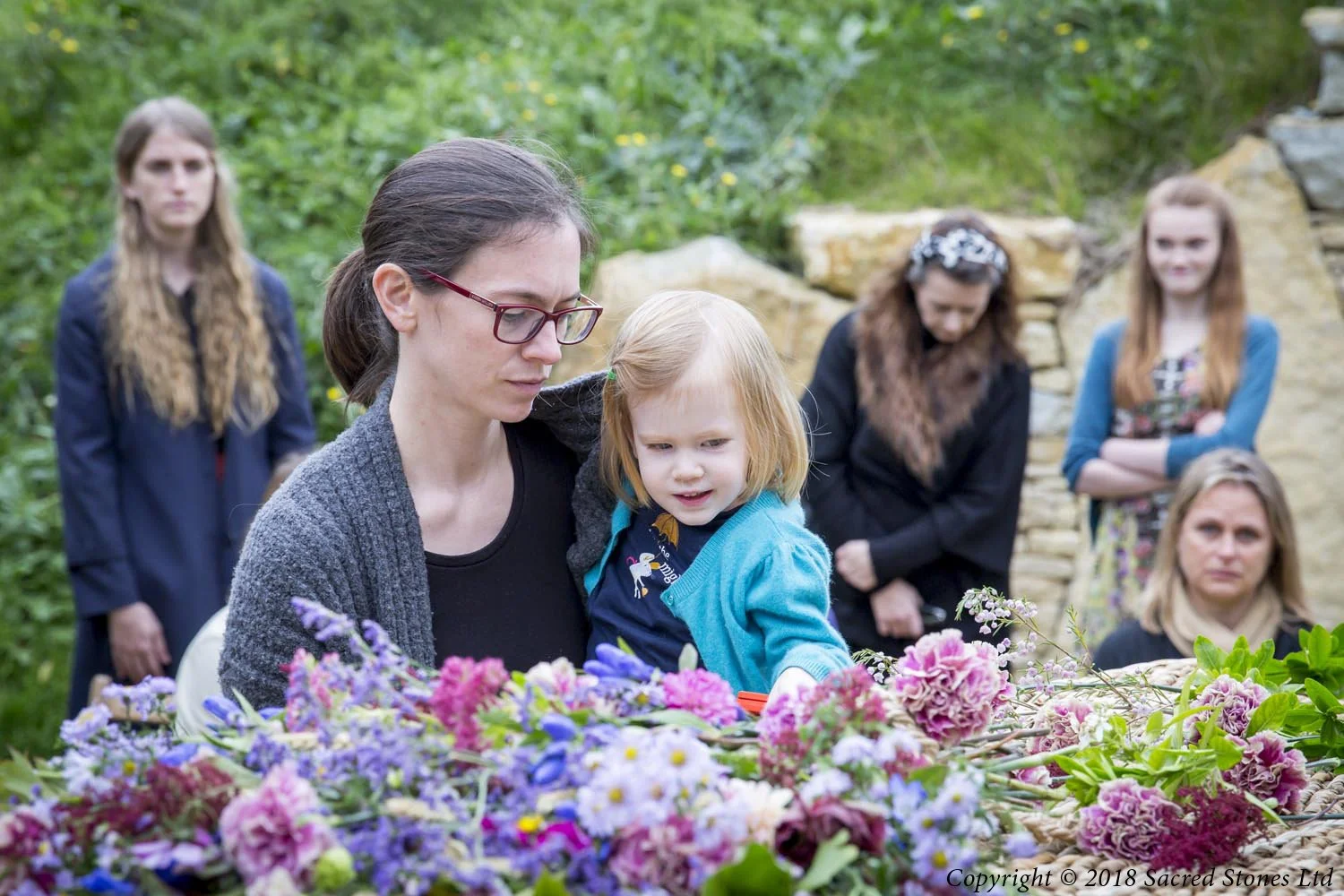
Flowers at the funeral
Placing a flower on the coffin can offer a simple moment of participation. Children can also choose flowers or help carry them into the ceremony.

Poetic Endings · Practical guidance
When someone close to a child dies, adults often wonder how much to tell them, whether they should attend the funeral, or if they might want to see the person who has died.
There aren't universal answers. What matters is giving children information they can understand, listening to what they want, and helping them feel prepared.
At Poetic Endings, we're used to helping children take part in funerals. Sometimes that means a special role in the ceremony. Sometimes it means a drawing, a flower, or simply knowing what is going to happen.
Ways children can take part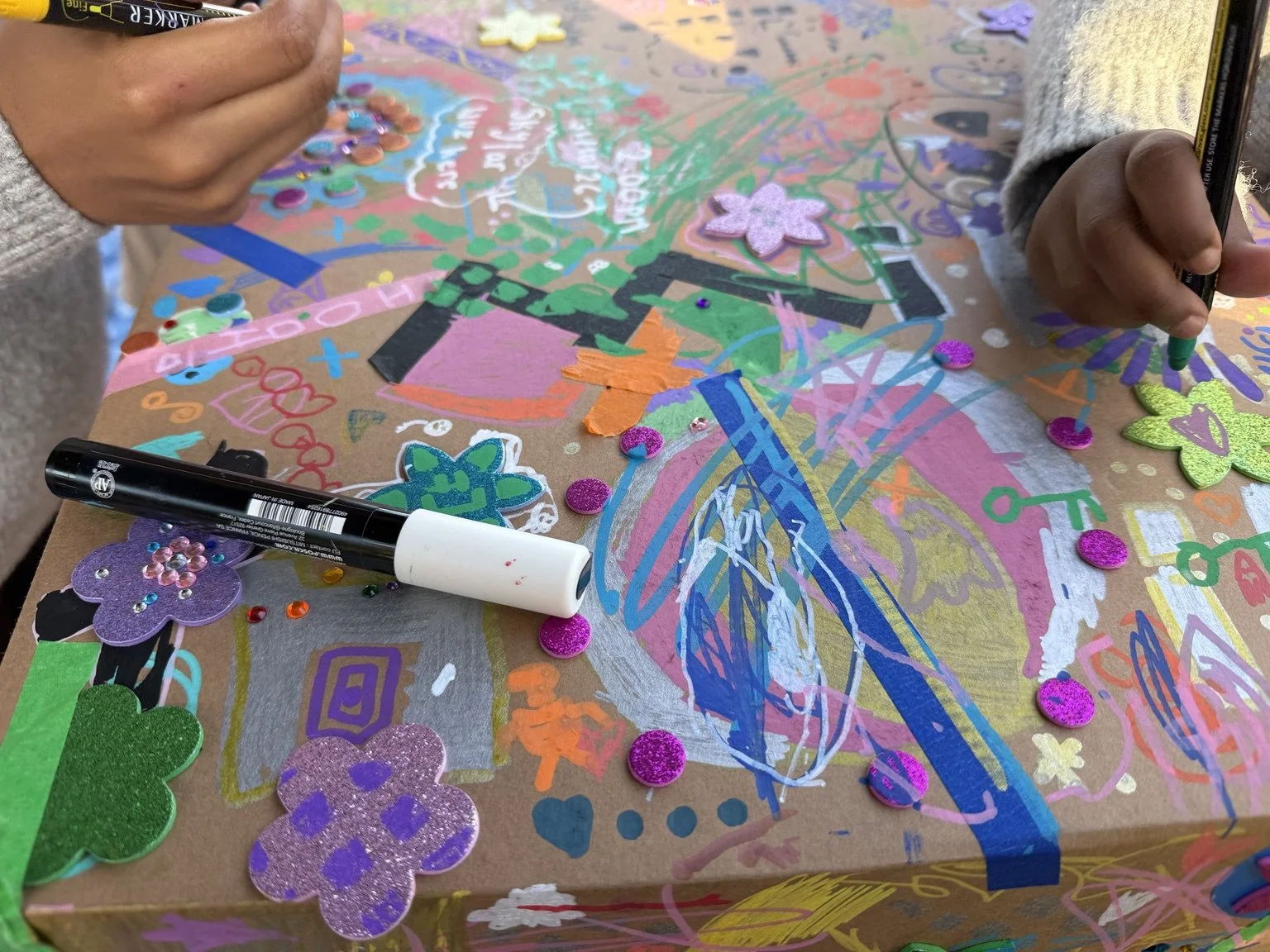
Finding the words
You don't need to have all the answers before starting a conversation.
Adults sometimes worry about saying the wrong thing. But children usually benefit from straightforward explanations rather than elaborate attempts to make what has happened sound less frightening.
Use language that makes sense for the child's age and understanding. Words such as 'died' are often clearer than saying someone has gone away, or is having a long sleep.
A conversation might last two minutes, or lead to dozens of questions. Children sometimes ask something very direct and then move on to another activity. That doesn't mean the conversation was unimportant.
Children may be curious about things that adults find difficult to discuss: what happens to the body, why someone died, where they are now, or what happens at a crematorium.
You can answer these questions without going into more detail than they want. It's also fine to say that you don't know something, or that different people have different beliefs.
A child might understand that someone has died, but still hope there has been a mistake, or ask when they are coming home. Try not to be frustrated by repeated questions. The information can be difficult to take in, even when the words are understood.
Bereavement can make children anxious about other people in their lives. They might wonder who will look after them, or whether someone else is going to die.
Where possible, explain the immediate practical arrangements: who is taking them to school, where they will sleep, and which adults they can talk to when they need help.
Visiting someone who has died
It's understandable to worry that seeing someone after death might be upsetting for a child. It's also worth considering whether the child would like the opportunity.
The decision doesn't need to be made without knowing what to expect. We can describe how the person looks, explain what the room is like, and answer questions beforehand.
Sometimes illness has changed a person's appearance. We will always be open about that, so you can make an informed decision. You can also visit on your own first.
If a child wants to come, they don't need to approach the coffin or stay for a particular length of time. They may want to look, talk, bring something, or leave quite quickly. They can change their mind.
If they would rather not visit, that is fine too. We can help them find another way of saying goodbye.
Ideas for the funeral
Children don't have to sit quietly through a ceremony for their presence to matter. Some welcome a particular task, while others prefer to stay close to someone they trust.
Beforehand
A picture, a handwritten note or a decorated coffin can become part of the funeral. Children might also choose photographs or help make the order of service.
During the funeral
Children can carry flowers, help welcome people, choose music, place a flower on the coffin or share a memory. Nothing needs to be performed perfectly.
In their own way
A child might prefer to sit with a relative, look at a photograph, or contribute something privately. There is no reason to turn their involvement into a responsibility.
At Poetic Endings
We try to make space for children's ideas rather than expecting them to fit into a predetermined version of what a funeral should look like. Here are some of the possibilities.
Placing a flower on the coffin can offer a simple moment of participation. Children can also choose flowers or help carry them into the ceremony.
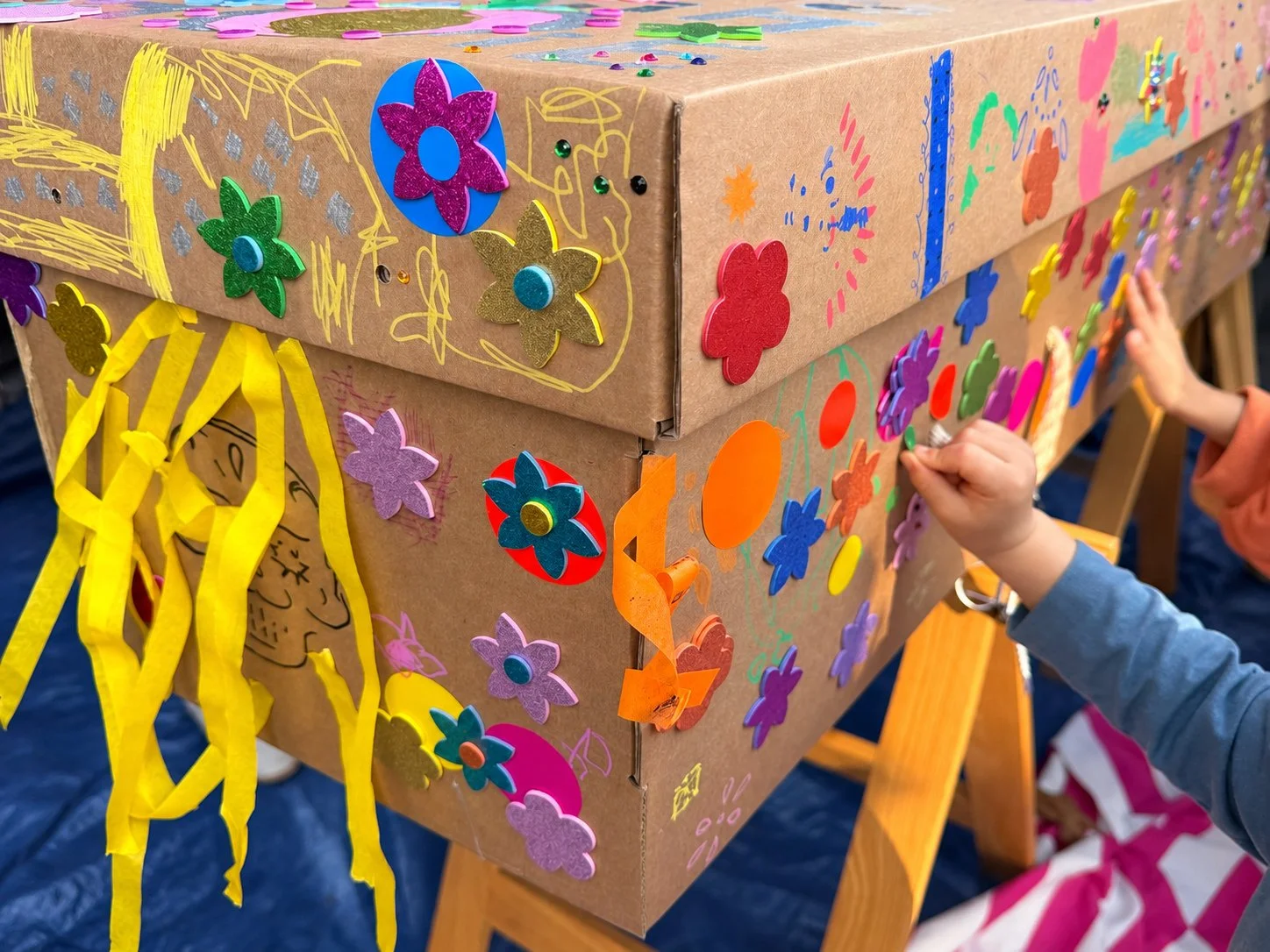
A plain coffin can become a surface for paintings, drawings, messages and colour. We recently held a coffin-decorating activity at the Horniman Museum, where children and adults made their own contributions.
Read about the Horniman workshop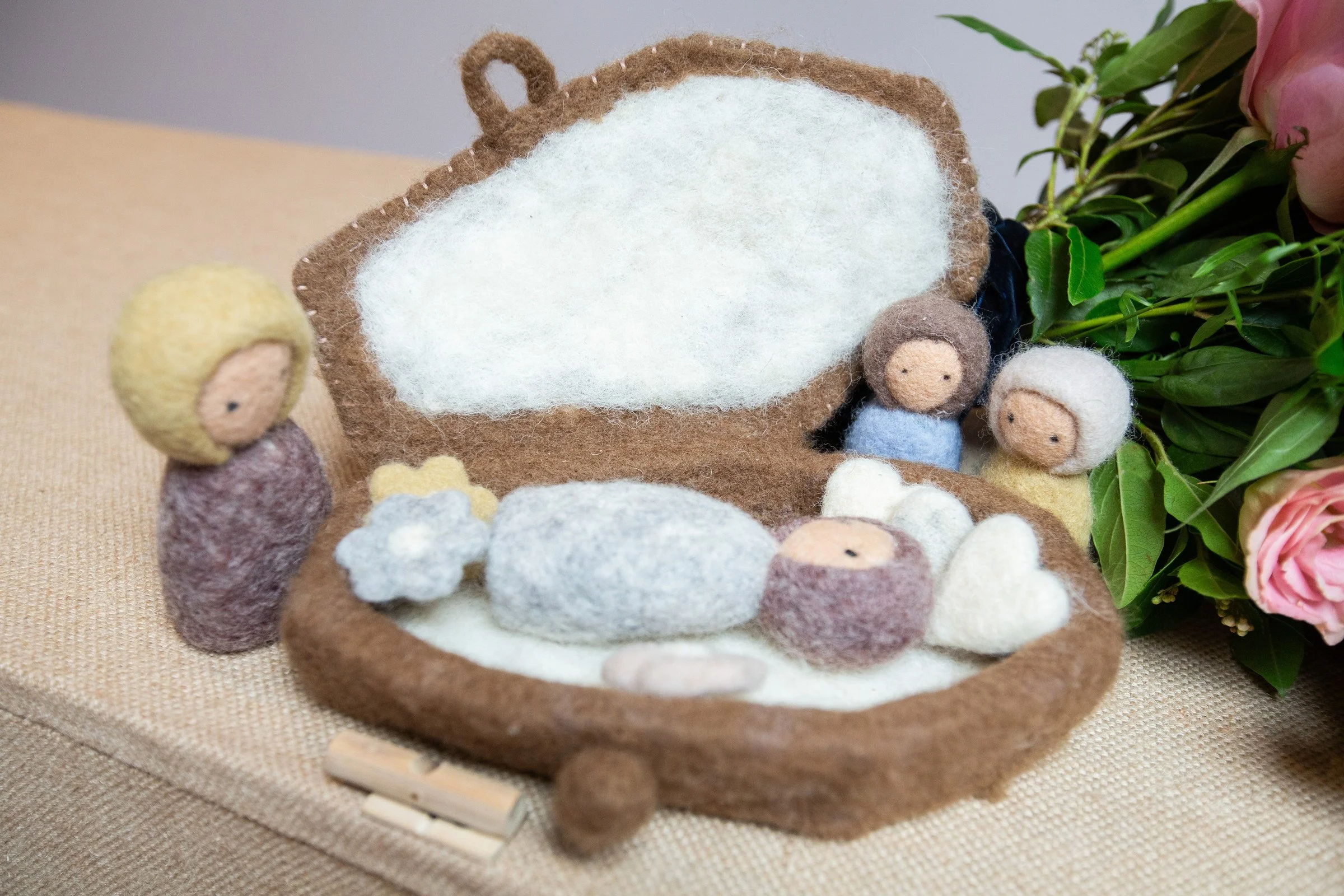
We have a felt funeral playset at our funeral home. Children can use it to explore what happens at a funeral, ask questions and become familiar with things they may not have encountered before.
Our funeral home in Forest Hill
You don't have to leave children at home when you come to Poetic Endings. They are welcome to visit with you.
Our funeral home has a felt funeral playset and a collection of children's books about death, grief and funerals.
The books are available to borrow, so you can read them together at home. Sometimes looking at an illustration or exploring an idea through play can make a conversation feel less intimidating.
We can also talk you through the funeral arrangements in a way that makes sense to the children who will be attending.
Preparing for the day
Knowing what to expect can help a child feel more comfortable about attending.
Describe where you will go, what the building or outdoor setting is like, where the coffin will be, and what people are likely to do.
If there will be a burial, explain what happens at the graveside. If the funeral is at a crematorium, explain how the ceremony will end and what happens to the coffin afterwards.
Some people may cry. Others might smile when they hear a funny story or see someone they haven't met for a long time. A funeral can contain several different moods, sometimes within a few minutes.
It can help to have a trusted adult who is happy to accompany a child outside if they need a break, want to ask a question, or simply need to move around.
If the child has agreed to read something or take part in another way, let them know that changing their mind is allowed.
A practical note: If a child wants to place a letter, drawing or keepsake inside the coffin, let us know. Requirements vary according to the type of burial or cremation, and we can check what is possible.
The weeks and months afterwards
Children don't necessarily express sadness in the ways adults expect.
A child might be upset one moment and absorbed in a game the next. They might want to talk constantly, or not mention the death for several days.
There can be changes in sleep, concentration, confidence or behaviour. It helps to stay curious about what they might be experiencing, rather than assuming there is a particular way they ought to respond.
Some children dream about the person who has died and wake expecting them to be there. Remembering the death on waking can be particularly upsetting.
You don't need to explain the dream away. Listening to what happened, acknowledging how painful that moment was, and offering comfort may be more helpful than trying to find an answer.
Familiar routines can provide some stability. School, friends, bedtime habits and favourite activities don't make grief disappear, but they give children parts of the day that still feel recognisable.
Remembering someone needn't be reserved for anniversaries or special occasions. Children might want to tell the same story repeatedly, ask to look at photographs, or mention the person unexpectedly in an ordinary conversation.
If a child is finding everyday life increasingly difficult, or their distress is persistent, specialist children's bereavement organisations can offer advice. You can also speak with their GP.
Common questions
There isn't a minimum age that applies to every child. Consider what they know about the death, whether they want to attend, and what support will be available on the day. Babies and younger children can also attend.
It's worth finding out what worries them and answering any questions, but there's no need to insist. They may prefer to help choose a song, make something, or be involved in a different way.
You don't need to hide every emotion. You can explain that you are sad because someone important has died. It can also help to reassure children that adults are there to look after them, rather than the other way around.
Yes. We can talk about suitable coffins and materials, and how decorating could be organised. This might happen before the funeral with drawings, paintings, messages or other personal contributions.
They're very welcome to. We can explain the vehicles, the coffin, what happens at a funeral, and how we look after someone who has died. There is no expectation that they should already know any of this.
Yes. We have a collection of books for children about death and bereavement. You are welcome to browse the collection when you visit and borrow books to read together at home.
Further information and support
We can help with the practical side of involving children in a funeral. These organisations also offer support for children and the adults caring for them.
Information about children's reactions to bereavement, conversations about death, and supporting children through loss.
Visit websiteGuidance and bereavement support for children and young people, including advice for parents and carers.
Visit websiteMore ideas about making funeral arrangements personal, including flowers, music, participation and different ways of saying goodbye.
Things to consider