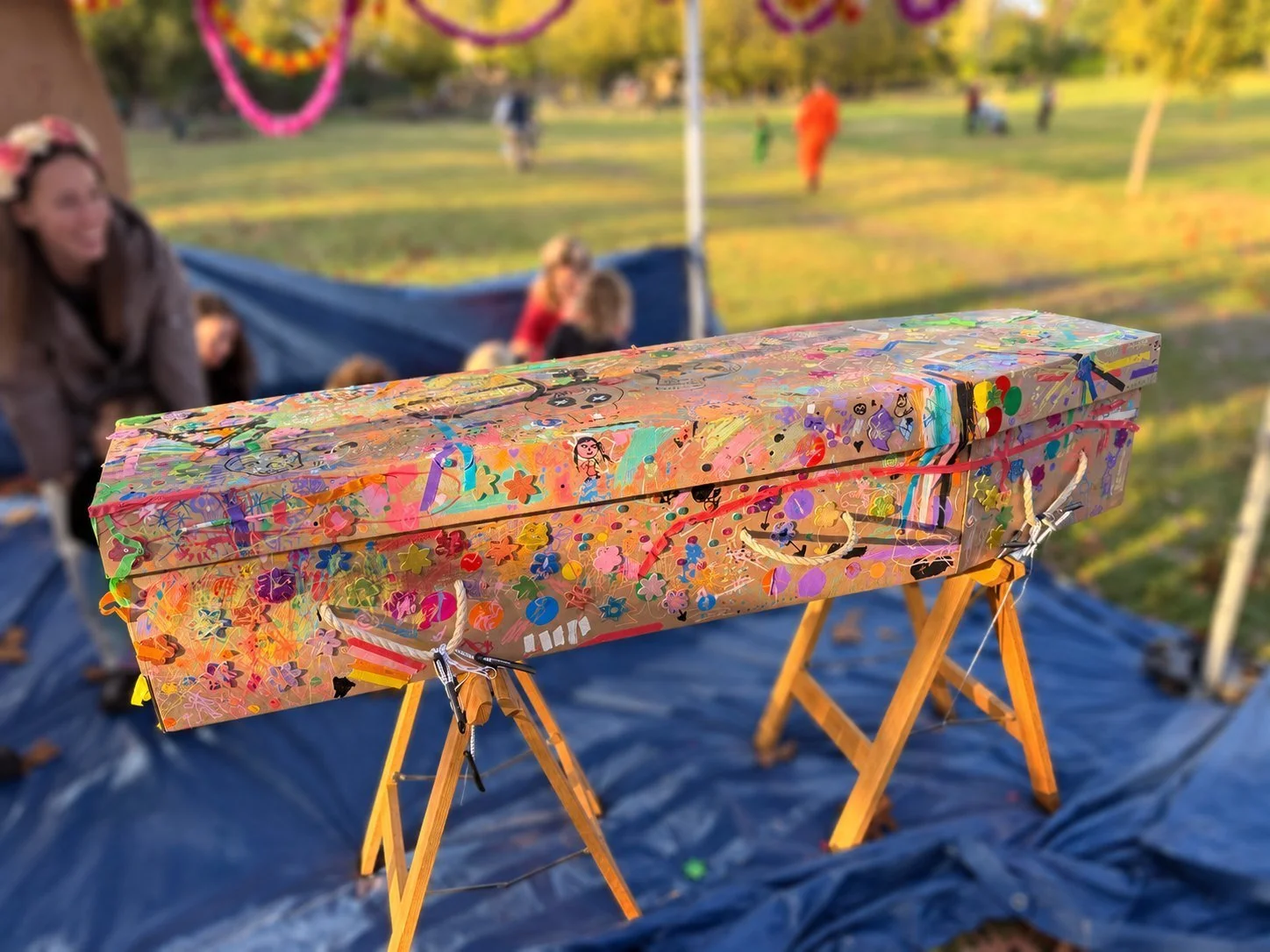
The cardboard coffin
Covered in drawings, flowers, tape, jewels, skulls, ghosts, messages and hundreds of individual marks.

An eight-year-old exclaimed this during an afternoon of coffin decorating at the Horniman. It was the best summary of the day.
On Saturday 31 October, we took two coffins, several hundred coloured balls and a fairly ridiculous quantity of craft materials up the road to the Horniman Museum & Gardens.
The Horniman had invited Poetic Endings to take part in its Day of the Dead celebrations in Forest Hill.
Most people only encounter a coffin when somebody has died. We wanted to put coffins somewhere completely different: outdoors, in a museum garden, with people wandering past, children playing and nobody quite sure what was going to happen to them.
The idea wasn't to make death frivolous. It was simply to let people get closer to something that is normally kept at a distance.


We brought a plain cardboard coffin and covered the tables with Posca pens, tape, felt flowers, jewels, stencils and anything else that looked fun to use.
There was no design to copy, no colour scheme to follow and no finished version we were trying to produce.
There were no instructions.


Children and adults picked up pens and started making their marks.
There were skulls, flowers, hearts, ghosts, names, messages, elaborate drawings, tiny scribbles and things whose meaning will probably remain known only to the person who put them there.
Some people spent ages working carefully on one small section. Others added something in seconds and carried on with their day.
As the afternoon went on, the individual drawings and decorations began to disappear into each other. The coffin became something that could never have been designed by one person.


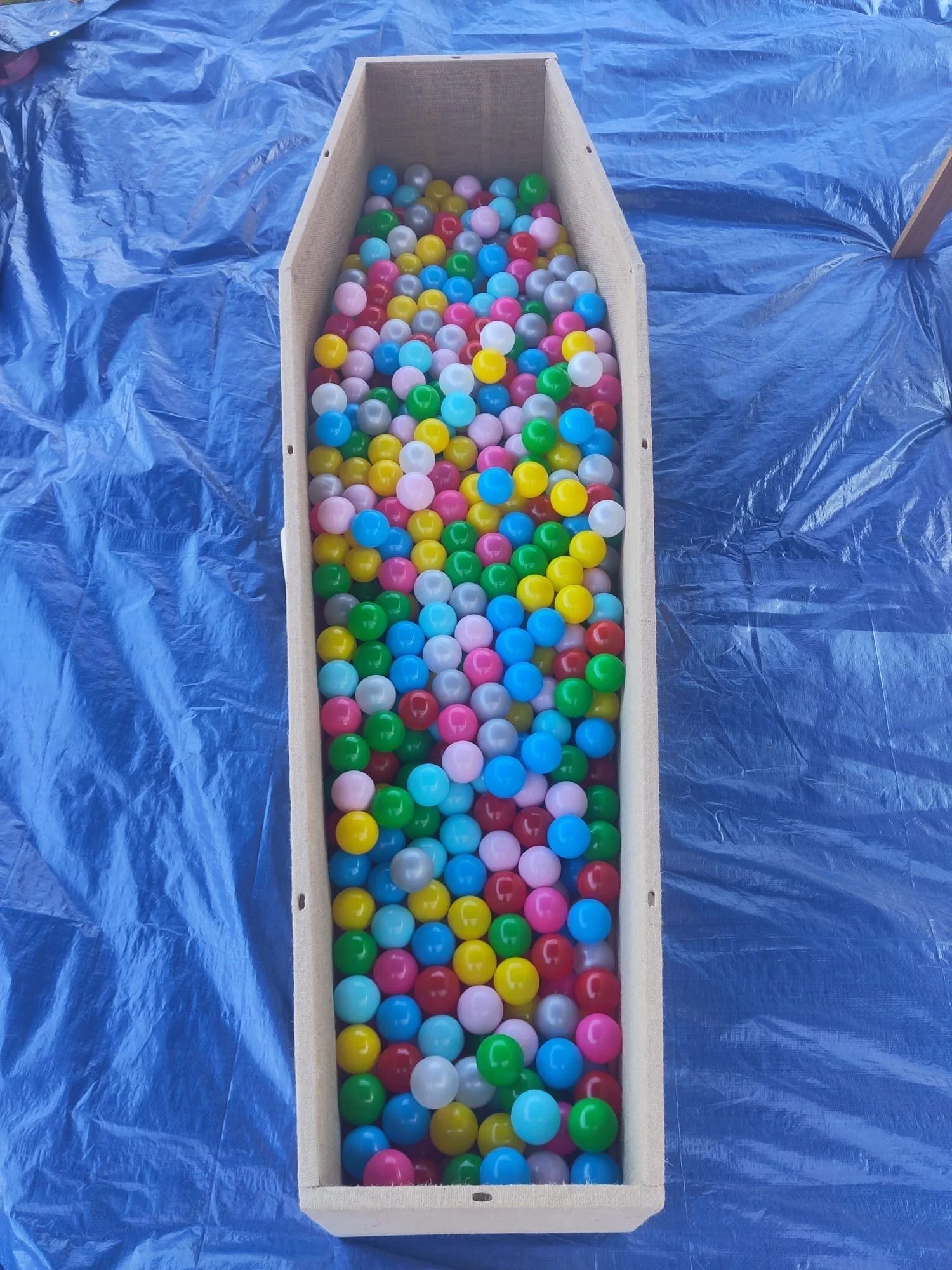
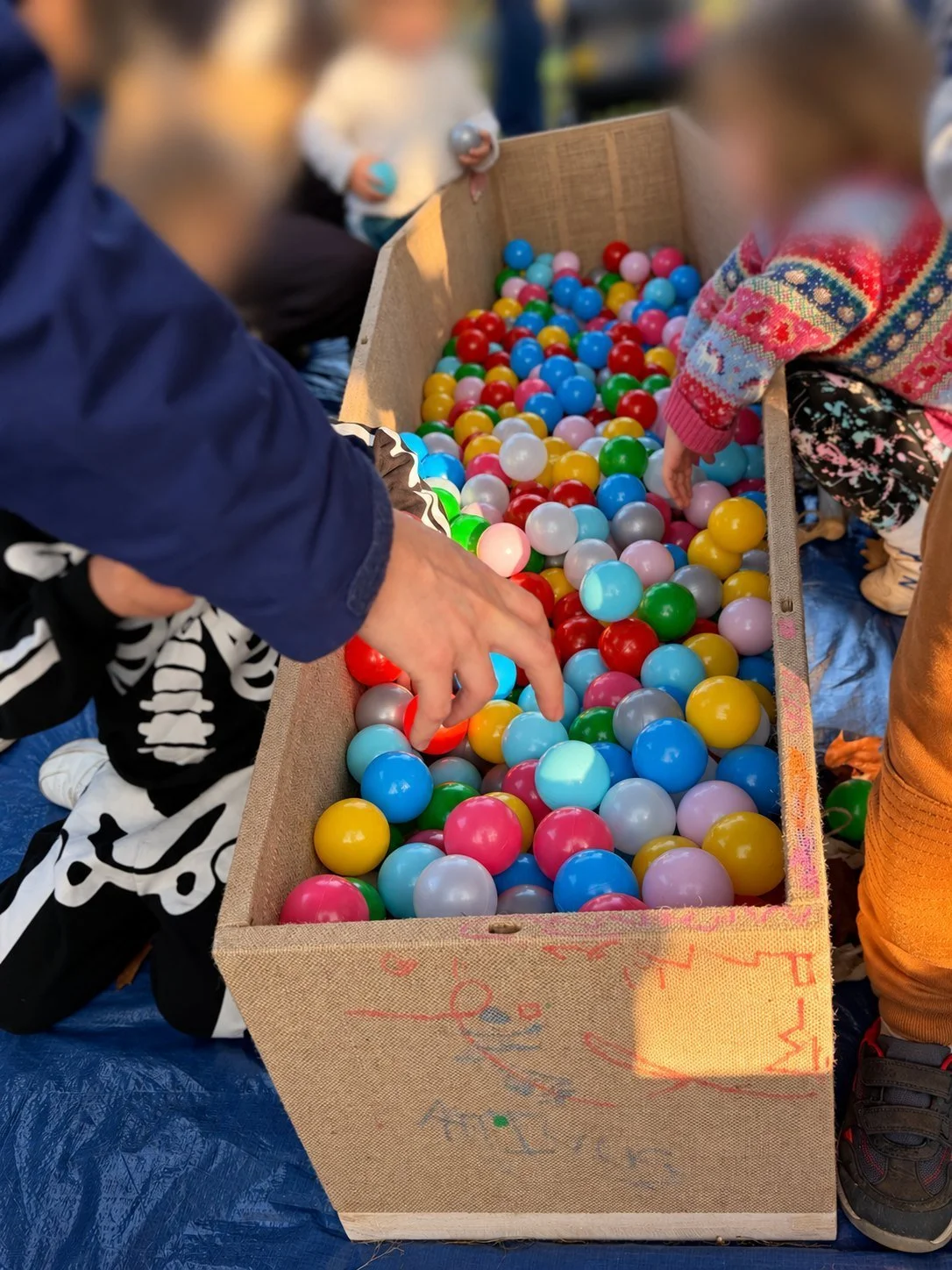
We filled it with several hundred coloured balls and invited people to get in.
Children generally needed very little encouragement.
Adults tended to laugh first.
Very quickly it stopped looking like something people were wary of and became something they wanted to investigate.
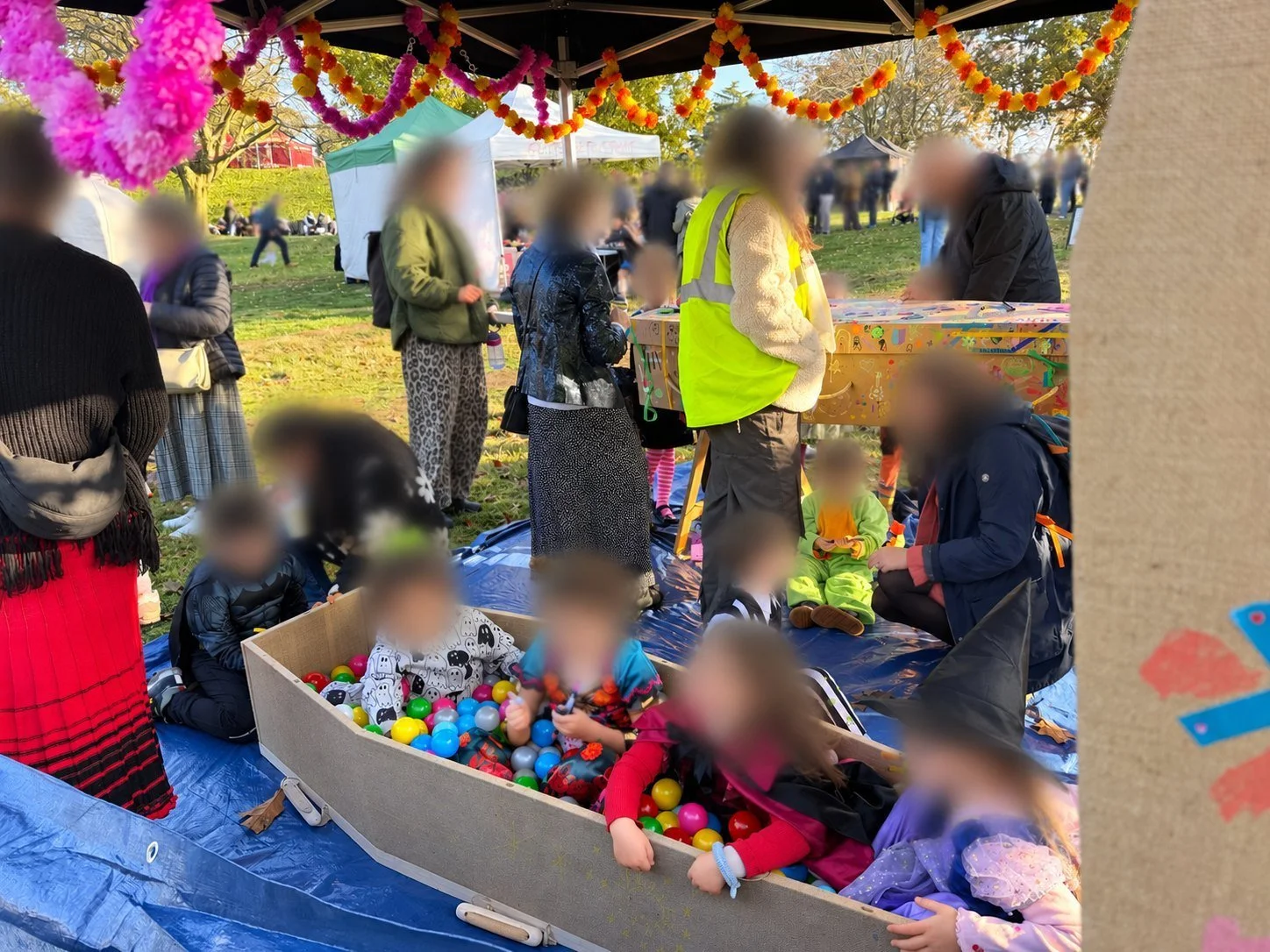

At some point during the afternoon, an eight-year-old looked at what was happening and exclaimed:
“Who knew that coffins could be this fun!”
I wrote it down immediately.
Most of us only encounter a coffin at an emotionally loaded moment. For a few hours at the Horniman, people could encounter the same object without all of that weight already attached to it.
Death hadn't become less serious. There was simply room for curiosity as well.
By the end of the day, both coffins had become records of the people who had passed through our little patch of the Horniman gardens.
Covered in drawings, flowers, tape, jewels, skulls, ghosts, messages and hundreds of individual marks.
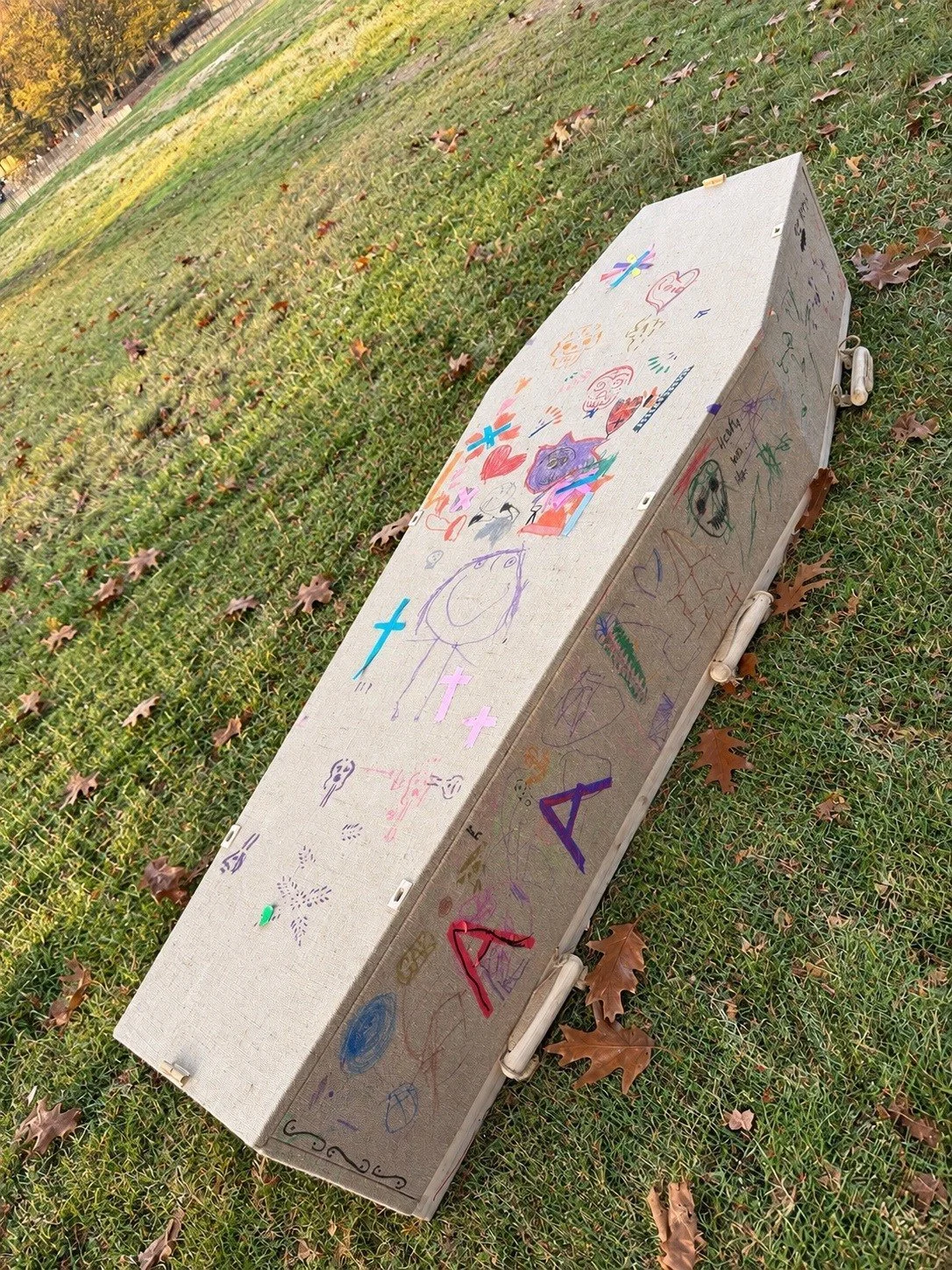
Formerly the ball pit, and now carrying its own collection of drawings and marks from the day.
Both coffins are now back with us at Poetic Endings and both are available to use.
We won't charge for either of them. If someone chooses one for a funeral, we'll simply invite them to make a donation to charity.
I love the thought that something made collectively by hundreds of people in the Horniman gardens might eventually become part of somebody's funeral.
Every flower, skull, scribble and slightly wonky piece of tape comes with it.
Thank you to the Horniman for inviting us, and to everyone who picked up a pen, stuck something on, climbed into the ball pit or stopped for a conversation.
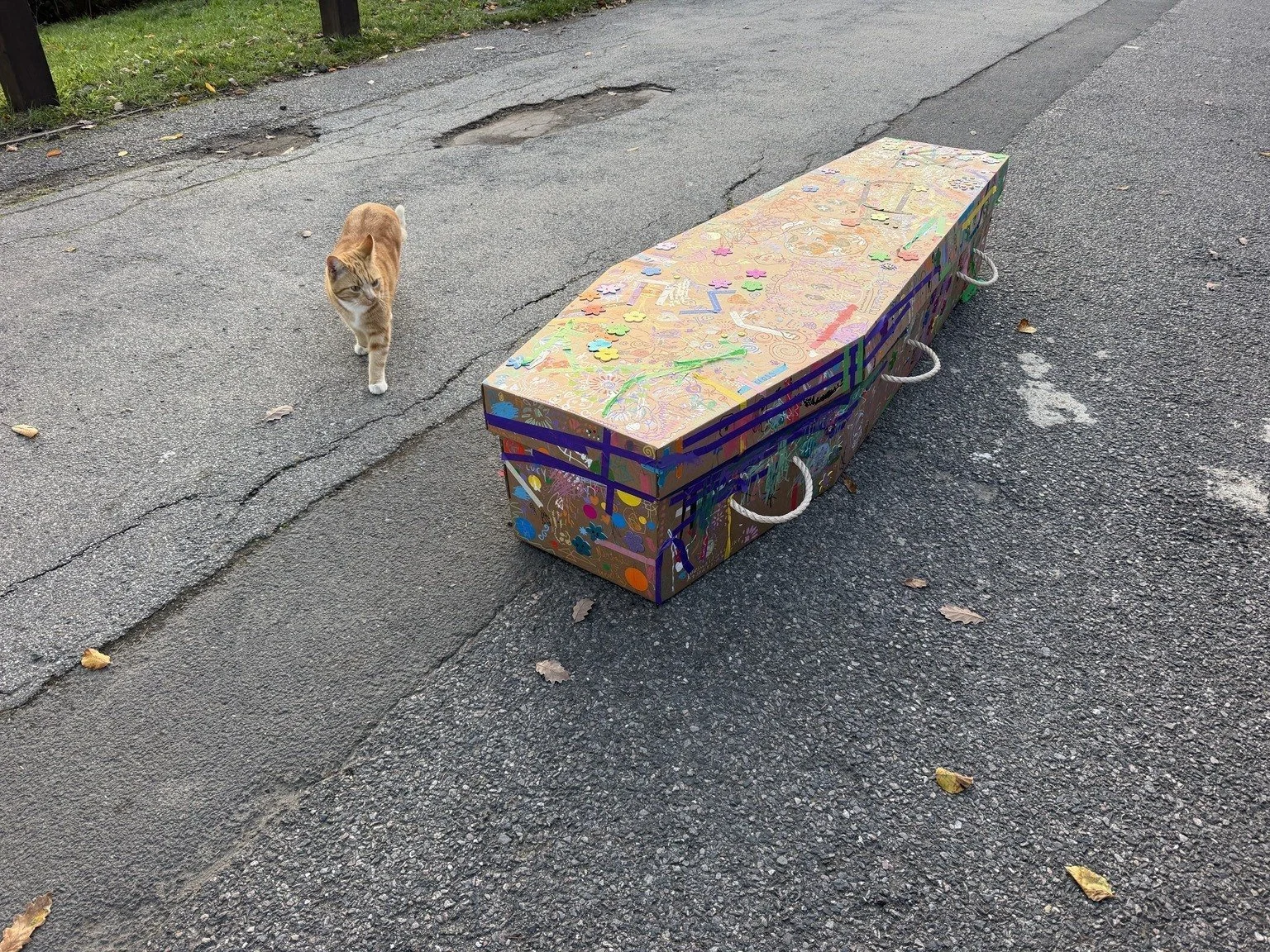
Final inspection by Tony.